The calendar has turned to April and the mountains are beginning to get green. There’s no doubt that spring has officially arrived in the Smokies!
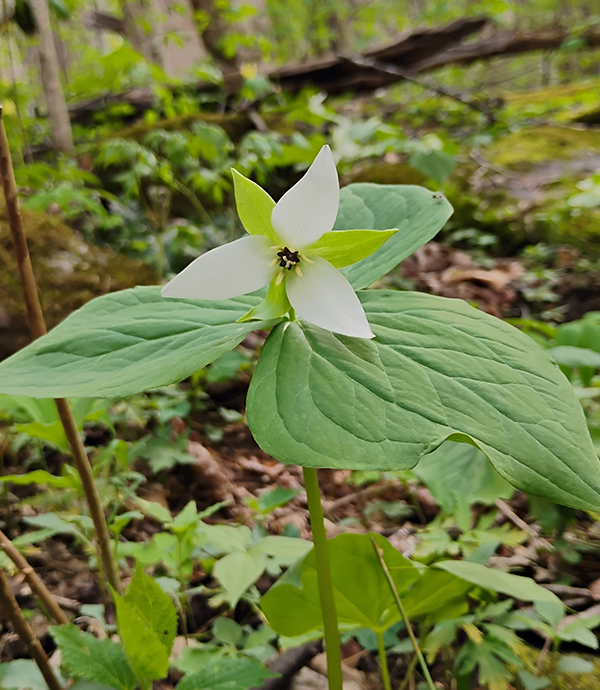
The woods are full of wildflowers including six different species of Trillium
Another way we know it’s spring in the Smokies is from the roller coaster of weather. We recently saw an 80 degree day followed by snow the next! It’s currently so warm that wet wading is a possibility. However, check the forecast before making that call. Less than a week ago we had a frosty morning, but the forecast is calling for much warmer nights. However, a dip back towards “average” will have you wanting waders.
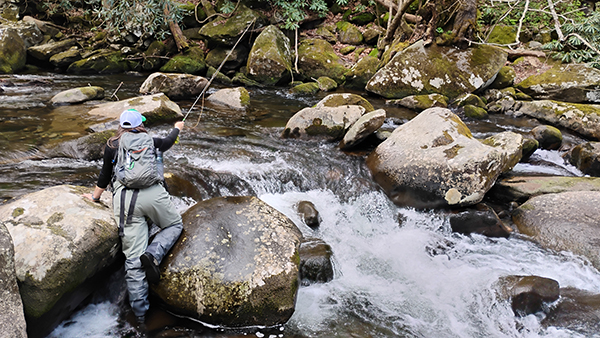
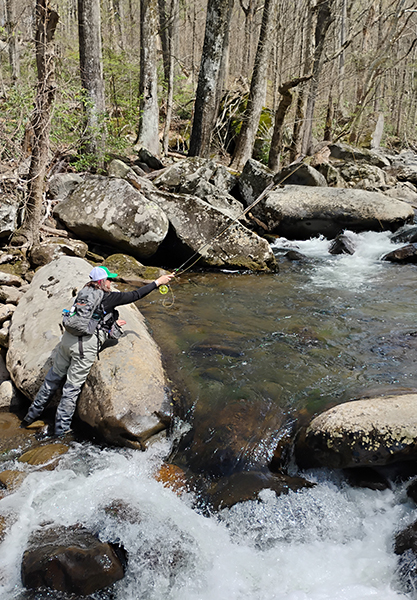
We’re fishing a dry dropper combo right now
We’re seeing plenty of bugs, but our hatches haven’t been as good this year as in past years. We’ve been catching plenty of fish, but Little River has been a bit “streaky”. There are times when it’s very slow in spite of perfect conditions, followed by a surge in activity for about 20 minutes, then another bit of slow action. It has been a bit of a puzzle, but I think the especially hard temperature swings this spring have kept the rainbows in spawning mode a little longer than usual. Fishing on brook trout waters has been more consistent than streams with predominant rainbow trout populations.
Morning fishing has not been bad, but the bulk of the action is coming in the afternoons. Nymphing is the way to go up until about noon or 1:00. We’ve been using more Beadhead Pheasant Tail Nymphs and Pat’s Nymphs in #14 than anything, but Princes, Tellicos, Hare’s Ears and other standards will get the job done.
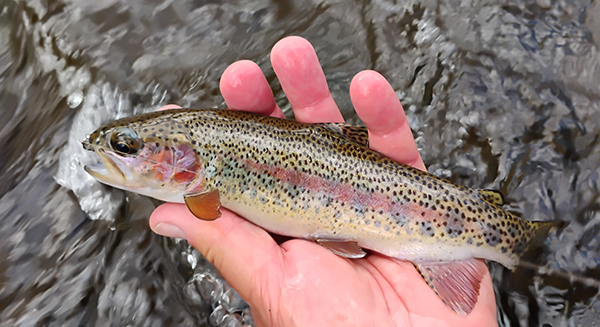
There are plenty of spunky fish out there. Rainbows are the most common fish caught in the larger streams.
Once the fish start eating well they seem to be just as likely to eat a dry fly as a nymph. We’ve been keeping our dry flies large, fishing #12’s. Haystacks, Quill Gordons, and Parachute Adams have been our choices, but #14 Elk Caddis and Stimulators will certainly work as well. There are lots of Brown Stoneflies laying eggs in the afternoons and evenings. Hendrickson mayflies will be hatching late in the evening if you stay out until the sun dips below the ridgelines.
Don’t feel like you have to choose between nymphs or dry flies. You can easily fish a dropper. Just be sure that they are a good fit. Save your heaviest nymphs for earlier in the day. It’s important that your nymph sinks, but not so heavy it drags down your dry fly. Similarly, be sure your dry fly is extra buoyant if you tie on a dropper. You don’t to have any false positives from a nymph that sinks the dry fly.
Get out and make the most of spring while it’s still here!