We hosted a group of fly fishers in Patagonia, Argentina a few weeks ago. There were 9 days of fishing across 3 lodges and hundreds of miles of incredible landscapes. The variety of waters was incredible, ranging from impossibly small spring creeks, to large rivers, and a variety of lakes both small and large. The trip was so impressive we already have plans to return in 2027 and you can join us. It was an incredible blend of scenery, beautiful trout, food, culture and new fishing methods. You can see the dates for this trip and can learn more by clicking here.
Here is a small sampling of photos from our trip in February.
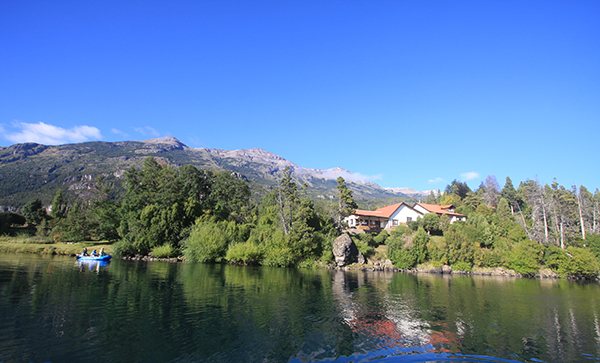
Here we are floating the Rio Grande past El Encuentro Lodge, the second place we stayed during our time in Patagonia, Argentina
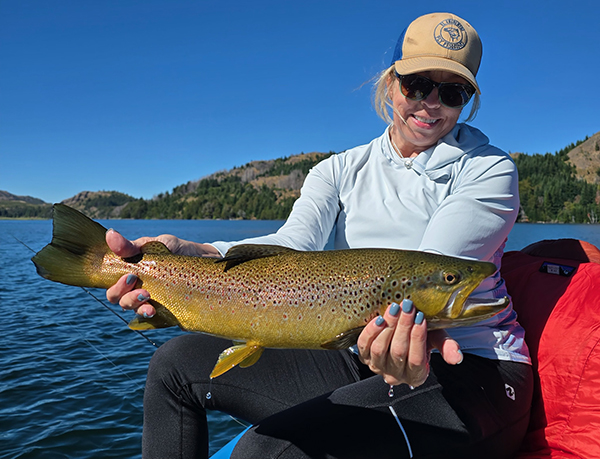
LaDawn has been traveling with us for about 20 years and is known for always catching some of the best fish on our trips.
The scenery was spectacular regardless of whether we were out on the rollings steppes or on a mountain lake surrounded by towering peaks. We would not characterize the fishing as easy, but the percentage of large trout brought to the net was impressive. In fact, we all probably lost a good number of the fish we hooked because of their size and strength.
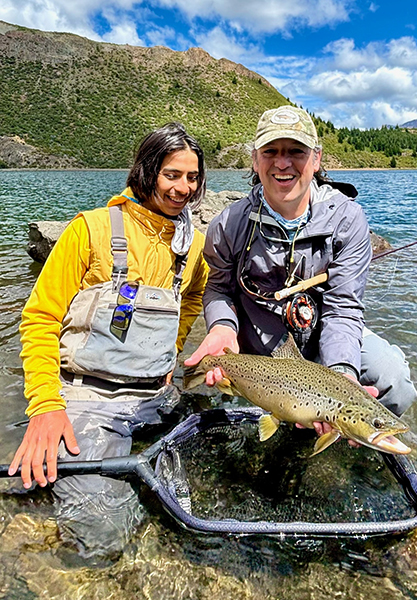
This was the only fish Ian landed on this day, but that’s exactly what the guide prepared us for. Few fish are typically caught in this lake, but there don’t seem to be any small ones. There were easier options to choose from for the day, but we couldn’t resist the challenge. Even if we didn’t land a fish in this lake, the drive to this remote location was worth the trip just for the spectacular views.
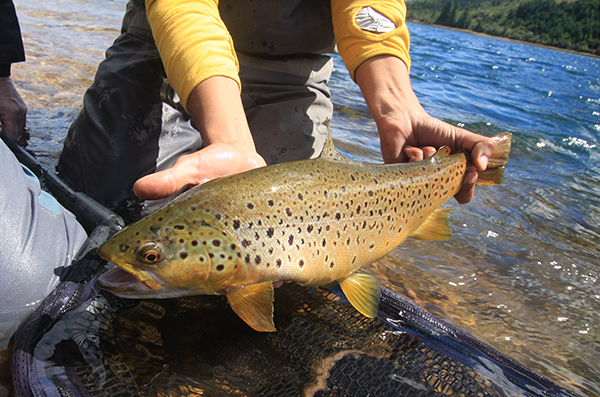
Charity also caught her allotted large brown trout for the day as well
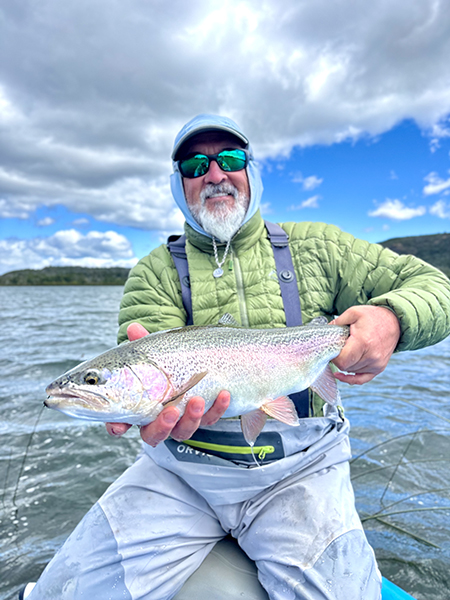
Philippe with a beautiful rainbow
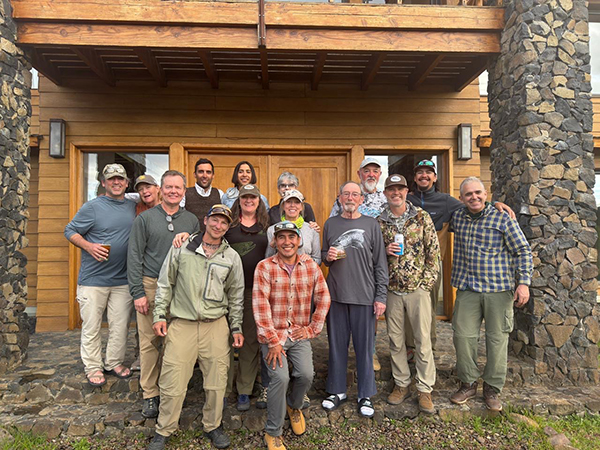
Our group and guides at Lago Rosario Lodge one evening after fishing
We’ve always wanted to put a trip together like this one, but there are so many moving parts. The area is vast and much of the fishing is on private estancias, Patagonian ranches that raise sheep and cattle. This was not something we could have put together without our contacts in Argentina. They have exclusive access to much of the water we fished, including 25 miles of spring creek and the upper Rio Corcovado from Brook Trout Base Camp.
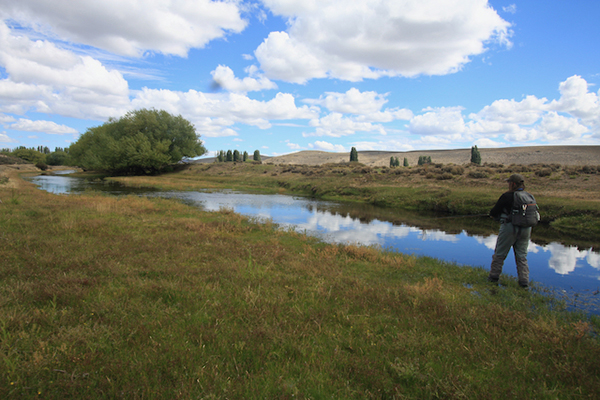
A small spring creek with large rainbows and browns that flowed 25 miles across a sprawling estancia with thousands of sheep.
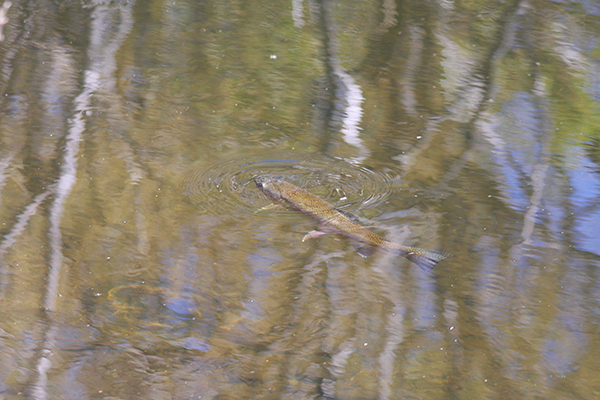
We sight fished dry flies to numerous rainbow and brown trout that day.
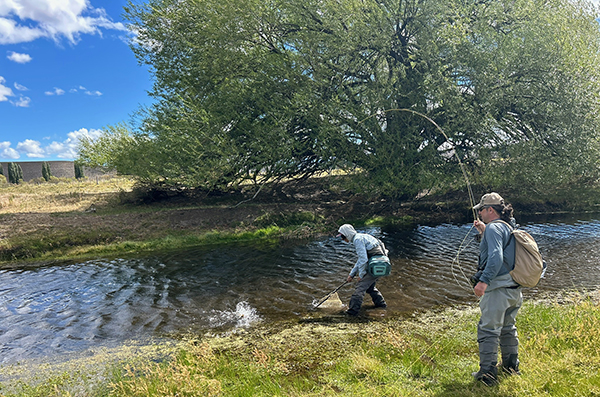
Netting a nice trout that took a dry fly on a small spring creek
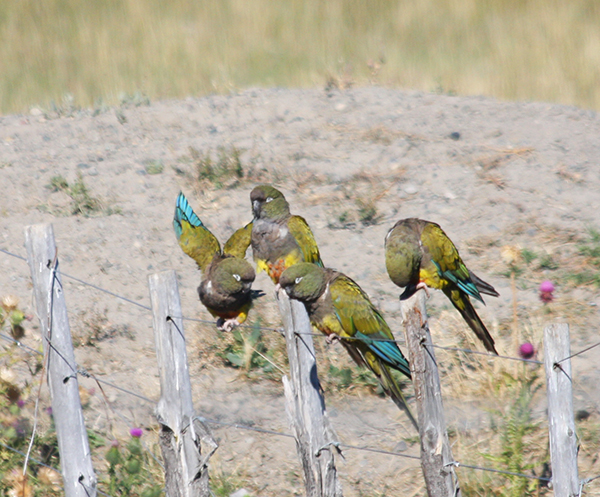
A flock of wild parrots greeted us as we approached the spring creek.
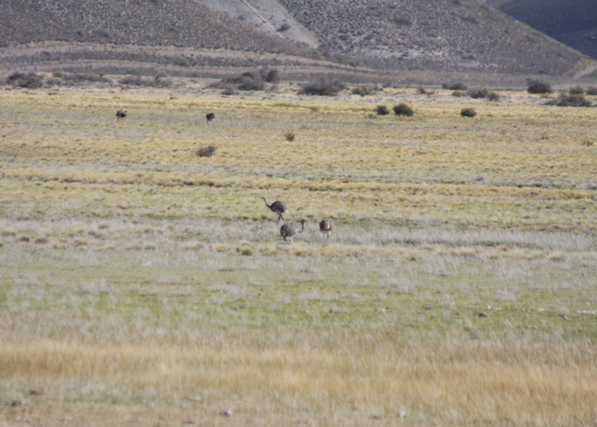
Rheas are large, flightless wild birds on the open grasslands of Patagonia. They are similar to emus or ostriches.
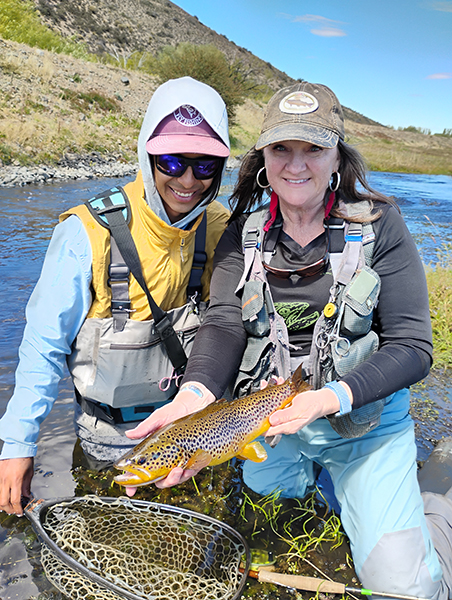
Charity with a spring creek brown trout on a dry fly
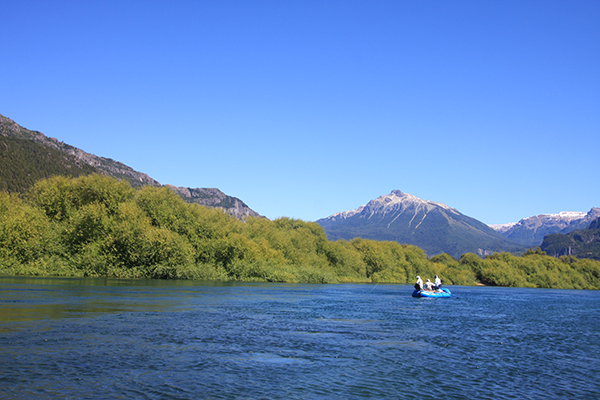
We floated the massive Rio Grande, also known as the Futaleufu when it crosses into Chile. It’s full of rainbow and brown trout and surrounded by high mountain peaks.
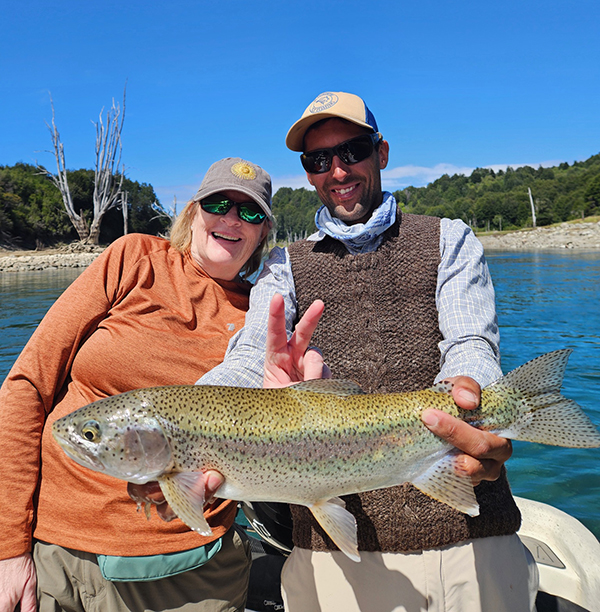
Melanie came along with her husband Philippe, but didn’t fish much. Senior guide Kevin Eddy apparently gave her a great lesson on a trip to Los Alerces National Park – Pretty impressive for her first trout on the fly!
Our accommodations and food were nothing short of amazing. Each morning we had breakfast made to order. Every day on the water featured a multi course shore lunch with wine. After fishing we were greeted at the lodge with appetizers and cocktails before a multi course dinner with wine pairings. Just phenomenal service and food.
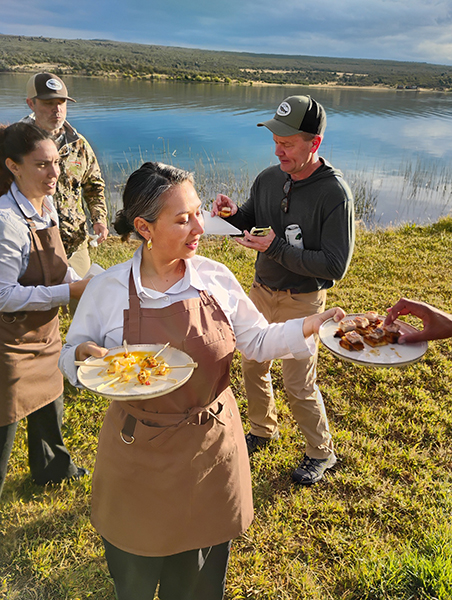
Evening appetizers on the shore of Lago Rosario where we spent our first three days in Patagonia
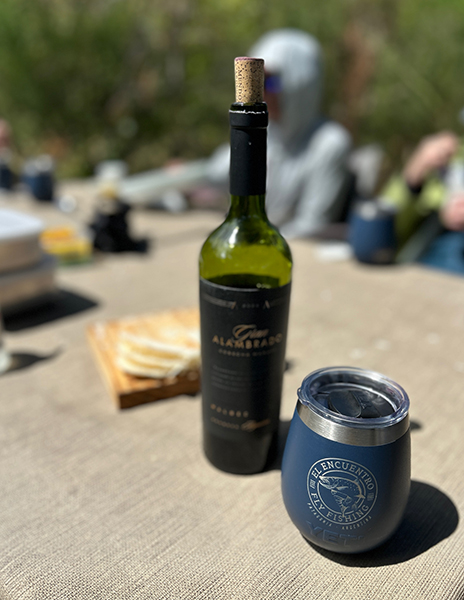
Wine was always an option with lunch
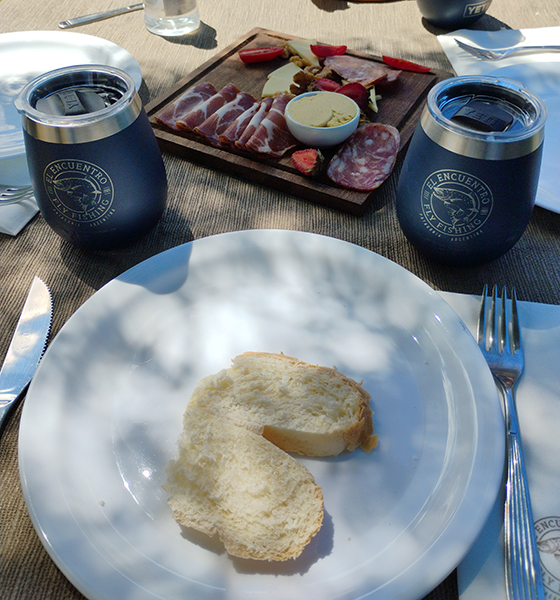
First course of lunch is served streamside with fresh baked bread.
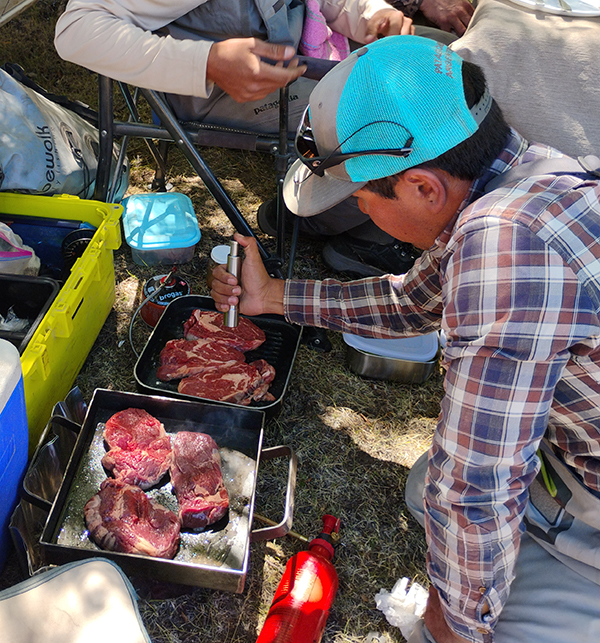
One day our guides grilled ribeyes for lunch on the side of the stream
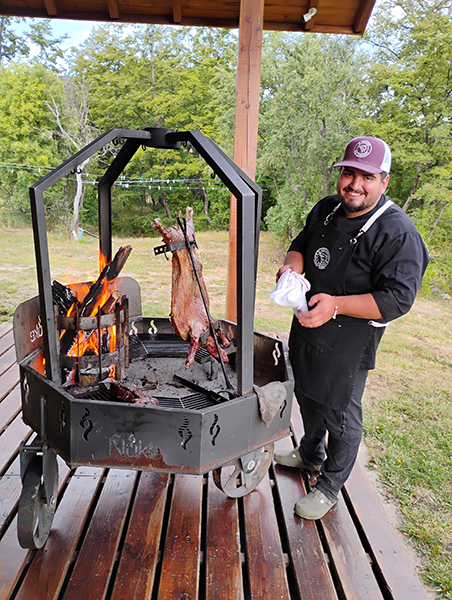
Asado is a traditional Argentine BBQ. What a treat!
El Encuentro is the main lodge of the three we stayed at. It sits on a bluff over the Rio Grande and faces an incredible peak known as the Throne of the Clouds.
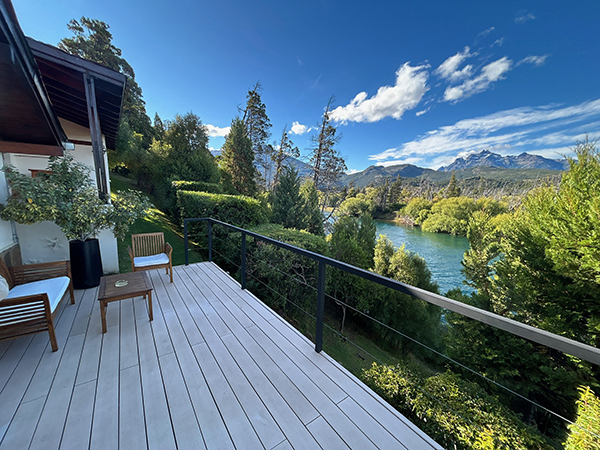
The deck at El Encuentro
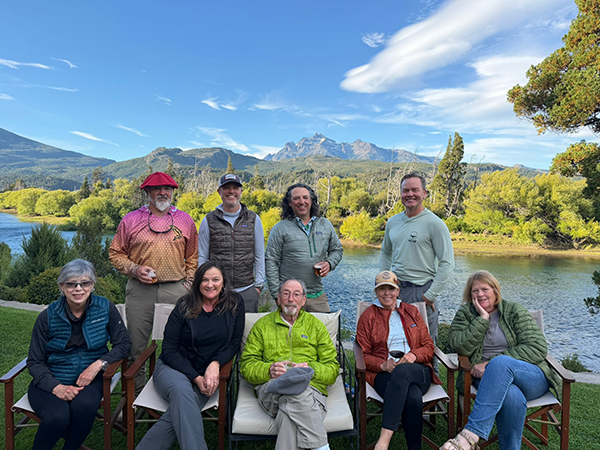
The group enjoys cocktails on the deck at El Encuentro after a fun day of fishing
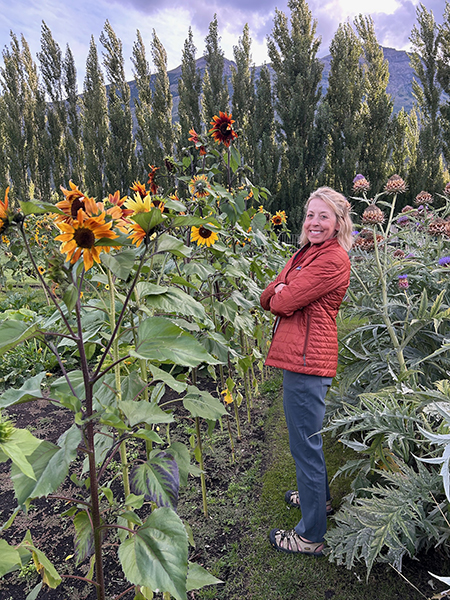
All of the vegetables served at the lodges come from El Encuentro’s garden which also has an incredible array of flowers.
The majority of locations we fished were remote by most standards. Brook Trout Base Camp, our third lodge situated on the banks of the Rio Corcovado, was a little more than two hours from Trevilin, the nearest small town. From that point we sometimes drove another hour or more to even further waters that are rarely fished.
Sometimes it was hard to remember that Brook Trout Base Camp was indeed a camp because of its posh accommodations. It runs entirely on solar, and wind power with a generator back up along with well water.
It gets its name because it is in a remote are known locally as “Brookie Land”. Most of the waters in the immediate area are either exclusively or predominantly brook trout. These waters produce incredible brook trout that average 18 – 21″ in length. It was incredible and I even asked one of the guides if the fish are born 16″ long since that was about the smallest we saw in all but one high mountain stream!
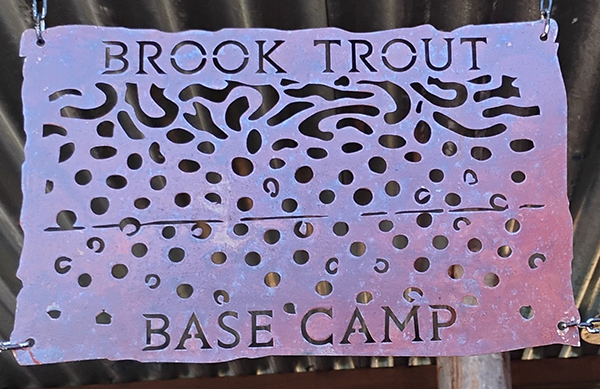
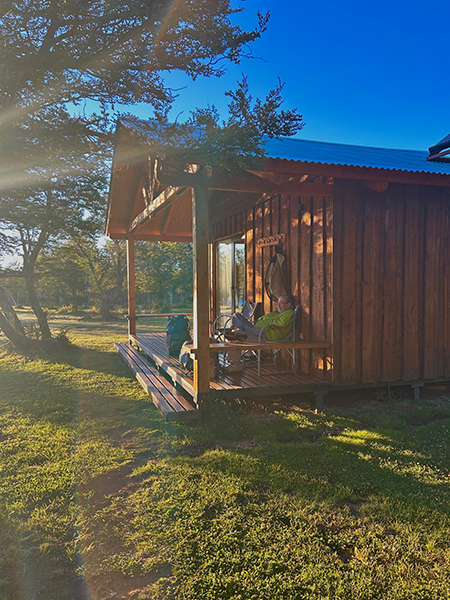
Andy enjoys the morning sun on the porch of his casita on the banks of Rio Corcovado at Brook Trout Base Camp
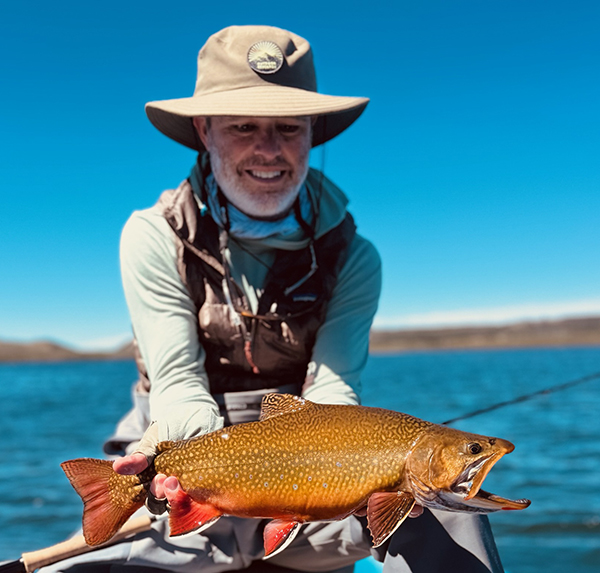
We soon learned why it’s known as Brook Trout Base Camp. Tucked into the base of the Andes is a string of lakes populated predominantly with brook trout. Stites Whatley with an impressive, yet common fish.
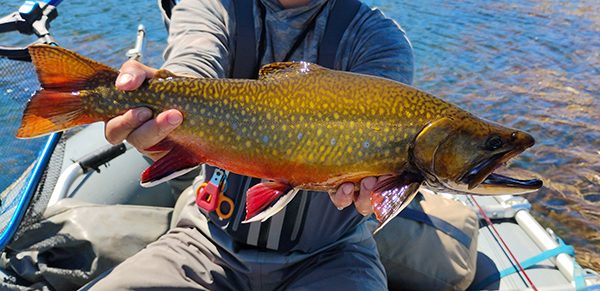
These photos have NOT been enhanced for color! These fish are actually that colorful
As people who guide for a living we found it fascinating to watch our guides and their assistants work. They assembled the rafts and tore them down everyday on the spot. Before I came to Patagonia I wondered why they primarily use rafts and not drift boats, and now I know! Any trailer as well as the boat on it would be destroyed in this environment. The vast majority of roads are dirt or gravel. It’s a continual stretch of washboards, potholes and big rocks. Paved highways are few and far between.
Some of us took a tremendous journey one day. Our guides were well aware that some of us were ready for the biggest adventure they had. We left Base Camp and drove over rugged terrain to where the already rough road disappeared and we we just drove overland. We arrived at a lake and the guides assembled the rafts.
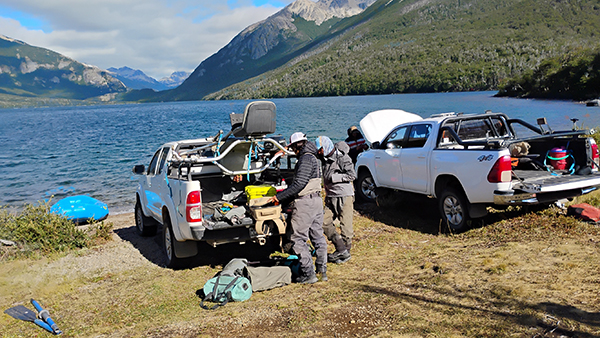
Assembling rafts at the end of the line. There was barely a hint of a trail that we drove to reach this place.
We motored across the lake where we stepped into an old growth forest. At this point our guides led us up a faint trail, up and over a ridge where even the path disappeared. A second lake appeared before us on the other side. Our guides said they might come to this place twice a season which explains the lack of a trail.
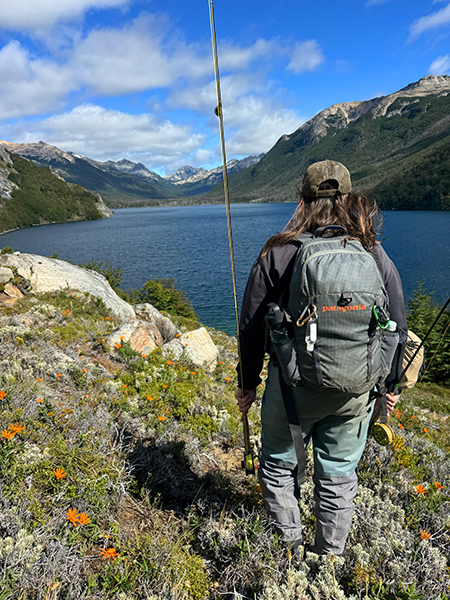
A remote mountain lake in the Andes
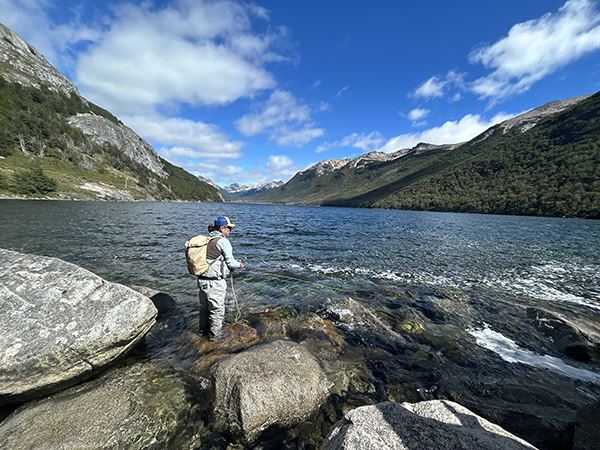
Fishing for brook trout in the outlet of the remote lake
These lakes have a very short summer and it’s a harsh environment with very little wildlife. Locals told us that it’s probably only been in the past century that human beings have regularly visited these high lakes. A small stream connected the two lakes and we fished it back down to where we landed in the rafts.
The fishing was very similar to what we have here in the Smokies. The brook trout were a bit bigger than what we have at home, but relatively small for Argentina. Regardless, it’s a place I would love to see again and we were right at home with the tactics.
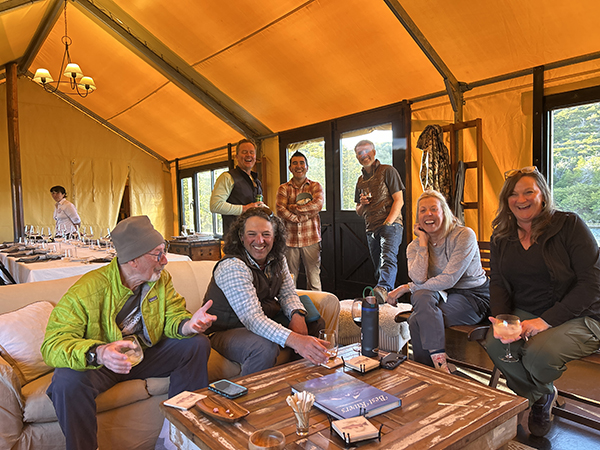
Meals were in the “big tent” at Brook Trout Base Camp. Again, we wouldn’t call it camping!
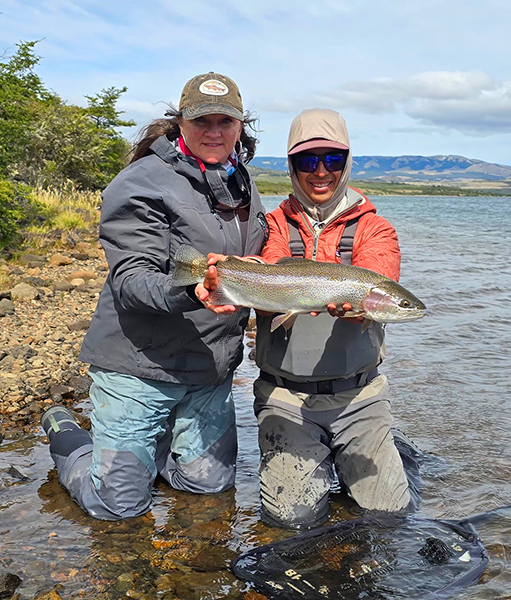
There are also some lakes in the vicinity of Brook Trout Base Camp with large rainbows
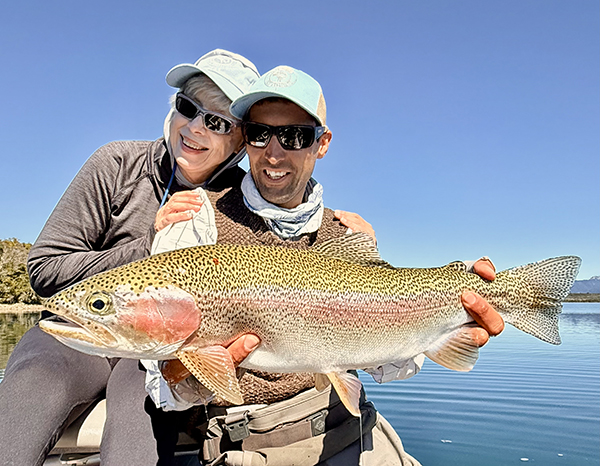
Nancy with her guide Kevin and an absolutely perfect rainbow trout.
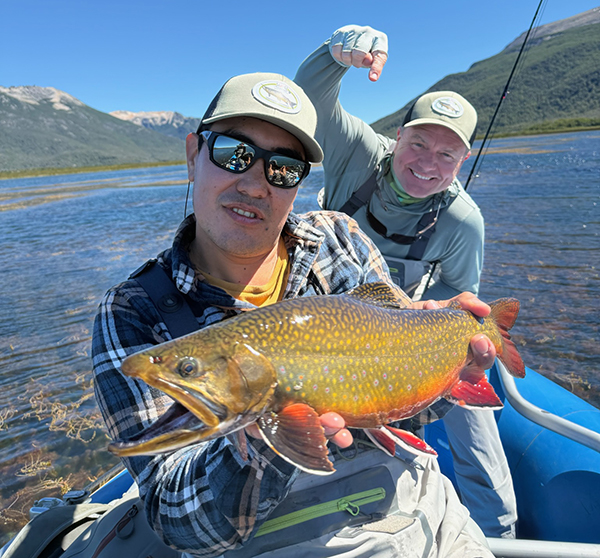
But brook trout are the main attraction! John Coley was perhaps the most enthusiastic in our group, continually awed by the scenery, local culture as well as the fish and we love him for it!
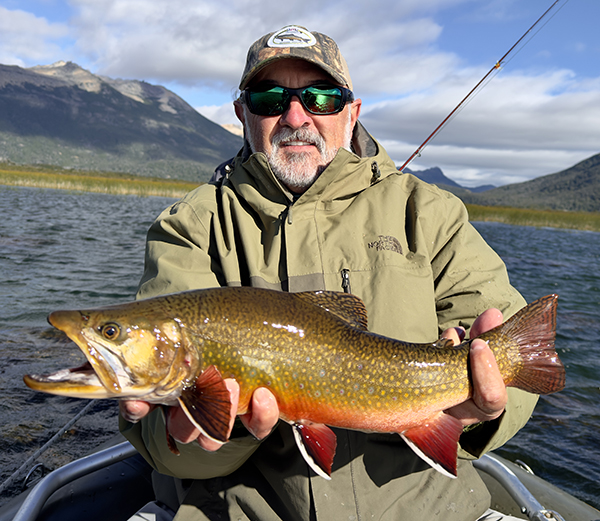
Philippe with one of many nice brook trout that day.
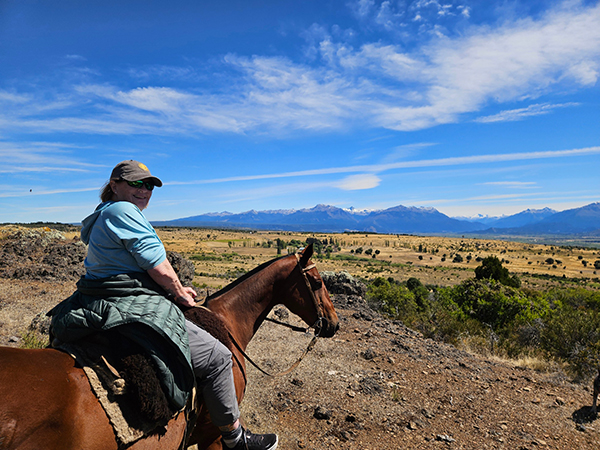
Melanie fished on a couple of occasions, but spent the bulk of her time touring the local countryside and small towns. She took horseback rides, city tours and a train excursion on a couple of days.
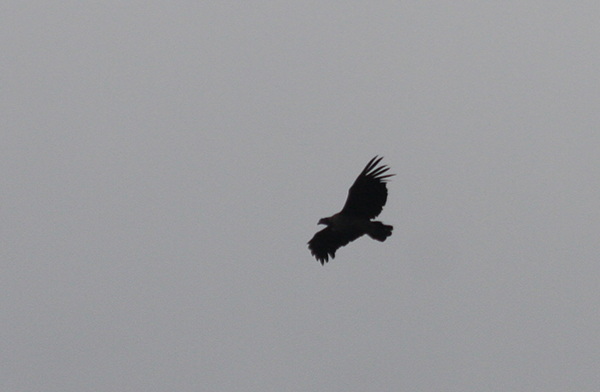
The Andean condor is a symbol of Patagonia and one of the largest birds in the world with a wingspan of approxately 10′. It was common to see at least one or two most days if you kept an eye to the sky.
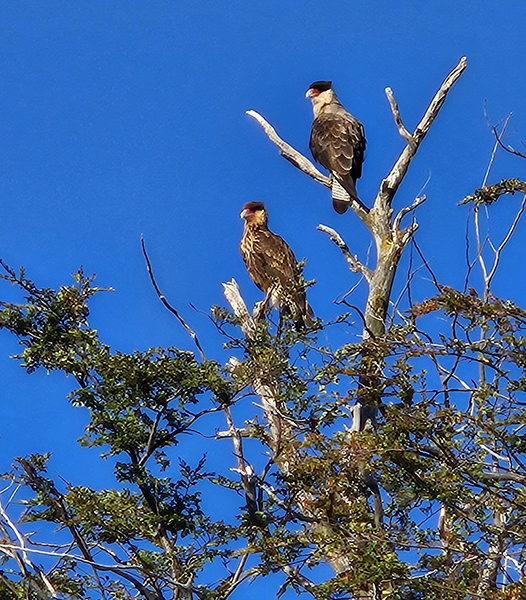
Crested cara cara are common raptors that are constant companions throughout Patagonia
We’ll be heading back to see our friends in Patagonia in February of 2027. Click here to learn about joining us to fly fish at the end of the world!
