We’ve had an exceptionally wet season already here in East Tennessee and the the Smoky Mountain region. By the end of February Knoxville had a rain surplus of over 10″ that continues to hang in there. Rivers and streams ran high for weeks and we saw some historic flooding in many areas. Fortunately the creeks are back in shape even as the tailwaters have yet to get where we want them. We’re all pretty antsy to get outside with all the bad weather and looking forward to spring fishing, but many have asked if all the high water has had adverse impacts on the trout population.
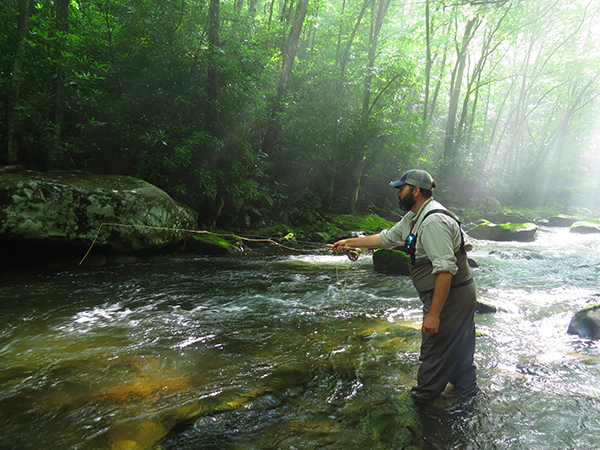
How many trout are left after winter floods in the Smokies?
Great Smoky Mountains National Park isn’t unique, but somewhat uncommon in the Southeast for being a completely wild trout fishery. Many of the most popular trout waters are stocked even if they have wild fish in them. Stocked waters will always have fish as long as the hatchery trucks are running on time, but wild trout fisheries are a little more complicated. Water conditions absolutely have impacts on wild trout populations, but nearly the opposite of what most anglers expect.
To be clear, severe floods can have harsh impacts on wild trout and the floods we’ve seen in 2020 certainly qualify. What has to be understood, though, is that floods do not impact all trout the same. The exact timing of the flood often has more impact on the trout than the severity of the flood. This is because floods have very little impact upon adult fish but can be disastrous for trout eggs and the first stages of their life after they hatch.
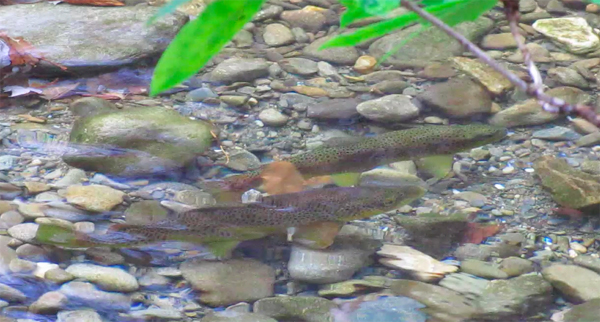
Brook trout and brown trout spawn in the late fall and their offspring are vulnerable to winter floods
Trout eggs are laid in gravel in rivers and streams where they get fresh current but are solidly kept in place. Eggs will develop into sac fry also known as alevins. These are essentially larval trout attached to their egg which provides them nourishment until they are old enough to swim about. Sac fry are clumsy swimmers at best and have to stay in somewhat sheltered areas until they consume the egg entirely and develop into powerful swimmers. Eggs and sac fry are both exceptionally vulnerable to extreme water flows that shift gravel beds in the stream bed.
It’s also important to point out that rainbow trout are spring spawners while brook and brown trout spawn in the fall. This means that rainbow trout should not have been affected much by our recent floods as the entire population in the stream is somewhere between juvenile and adult. All are somewhere close to 4″ long are larger and have not spawned yet for 2020.
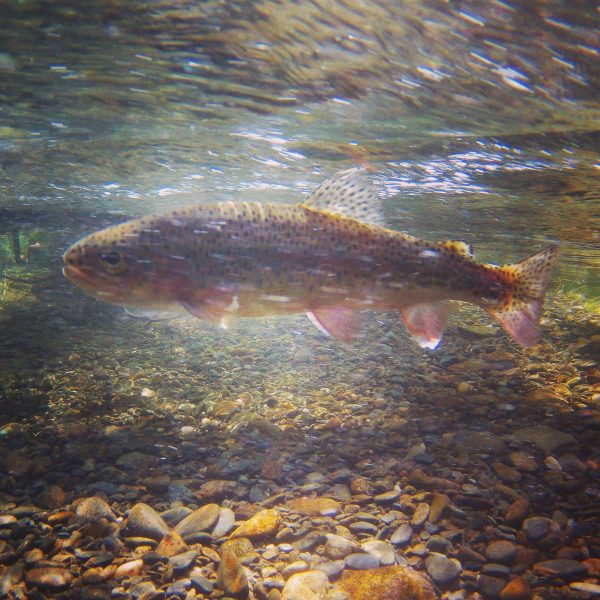
Wild rainbow trout in the Smokies are just starting to spawn so flooding last month did not affect them
Anglers heading into the Smokies this year probably will not notice fewer fish this season as any trout that may have been washed out would be too small to eat a fly until later in the fall. However, it was a pretty clear consensus among anglers we know that last year was superb for nice trout in the Smokies. There sure were more 10″ and larger rainbow trout. Everyone seemed to enjoy that, but one of the main factors why we had more large rainbows was because there were fewer small ones. Spring floods wiped them out in a previous year. That made more food for mature fish as well as fewer small, greedy ones to grab the fly.
This also explains why we’ll see population surges of brown trout or rainbow trout. If a year class of rainbow trout is lost due to a flood it makes more food and habitat available for brown trout. Brown trout may be able to keep a competitive advantage during seasons with low flows that seem to favor them over rainbows. However, late fall or winter floods will diminish their future numbers.
This year we may have lost a year of new brown trout and brook trout, but the older fish are still there. This means fewer small fish. Rainbow trout will be spawning soon so their offspring will fill that gap. It’s a give and take among the trout populations that has happened before and will continue into the future.
So don’t worry! The fish are there and ready for spring.
