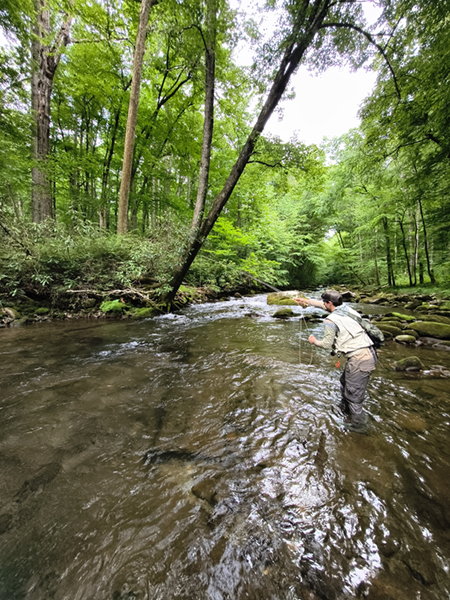
Summer is the best time to hike in to more remote areas of the Smokies to wet wade
Summer is here along with the excellent backcountry fishing we look forward to! Spring insect hatches are behind us, but dry fly fishing is still good. In fact, nymph fishing has also been with the water levels we’ve had. You can’t necessarily describe it as a “wet” summer so far, but the Smokies are a rain forest and short but heavy downpours are an integral part of summer here.
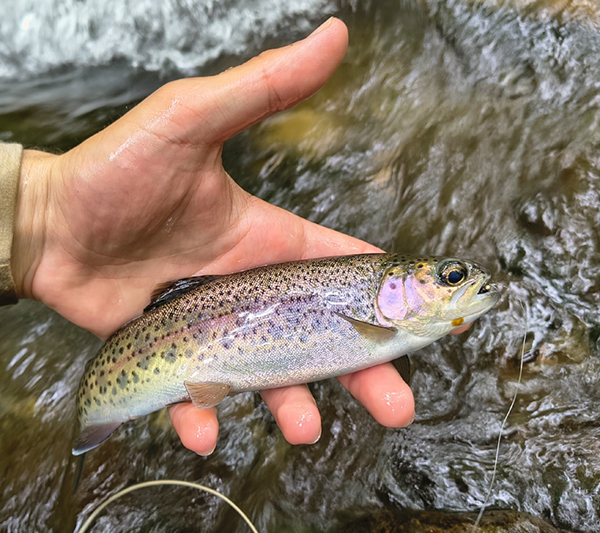
This chunky wild rainbow took a #16 Beadhead Pheasant Tail Nymph
Trout in the Smokies are rarely very picky when it comes to fly selection, but the size of your fly is important. On a typical day of guiding we usually rig up a dry fly with a dropper nymph. The dry fly is a bushy, high floating pattern in #14 and the nymph is weighted in a size #16 – 18. The combination of flies you use is very important. You need a dry fly that floats well and a nymph that sinks, but the fly can’t be so heavy as to drag your dry fly under with every drift. Stream levels are rarely high during the summer so a modestly weighted nymph pattern fished 18 – 24″ under a dry fly is plenty adequate. Save your extra heavy tungsten bead flies for deeper, swifter, and colder stream flows at other times of the year.
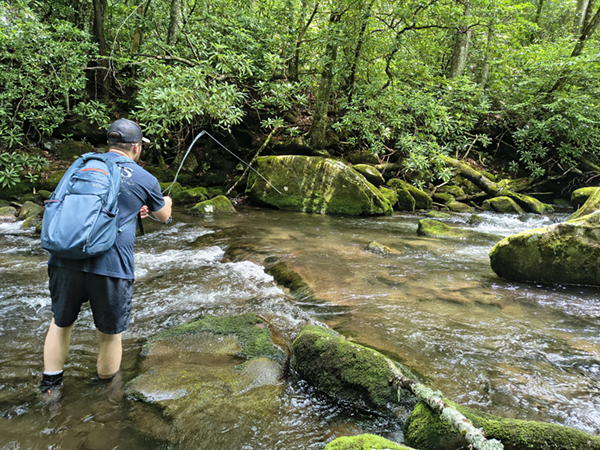
A pack with the necessities is good to have a few miles up the trail
Be sure to pack a light rain jacket if you head up the trail in the summer. It just might rain regardless of what the weather forecast is in Knoxville. In fact, we typically look at the rain chances for Knoxville and double them. The high peaks of the Smoky Mountains have a way of stirring up afternoon thunderstorms. Thunderhead Mountain, the most prominent peak in proximity to Townsend, is aptly named.
A water bottle, extra snacks and a mild first aid kit are good to bring along too.
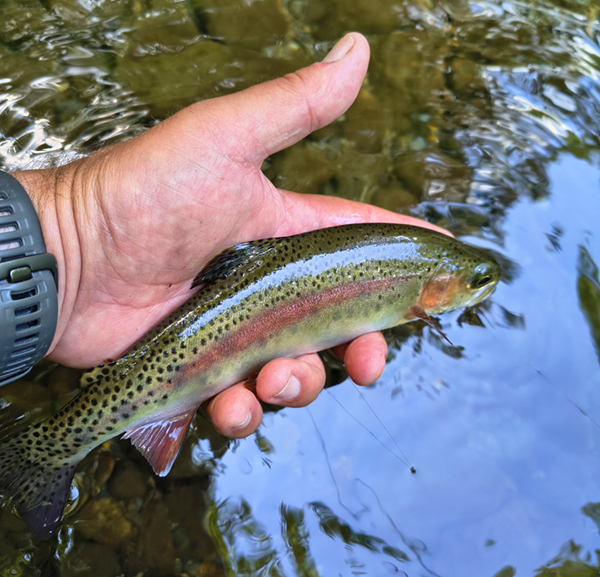
Water temperatures typically remain cool in the backcountry throughout the summer.
While it is important to consider water temperatures throughout the summer, streams usually stay pretty cool here in the Smokies. Elevation is the main thing to look at along with stream flows. Water temperature is more likely to creep up with low flows during the heat of summer, but typically stays pretty cool when the water is relatively high.
Look for elevations over 2000′, but that’s relatively easy in the Smokies since the main ridge line of the mountain range is anywhere from 5000′ to over 6600′ high. In fact, the majority of hike-in streams are above 2000′, so that may be the best reason to frequent them in summer. Even so, you can find some roadside locations at those higher elevations too, just not so many as the ones that require a hike.
