We’ve reached the middle of the fly fishing season, smack in the middle of summer in the Smokies. Spring fishing is long behind us and autumn is still well over the horizon. This is the time of year when days can be hot and humid and wet wading is the only way to go.
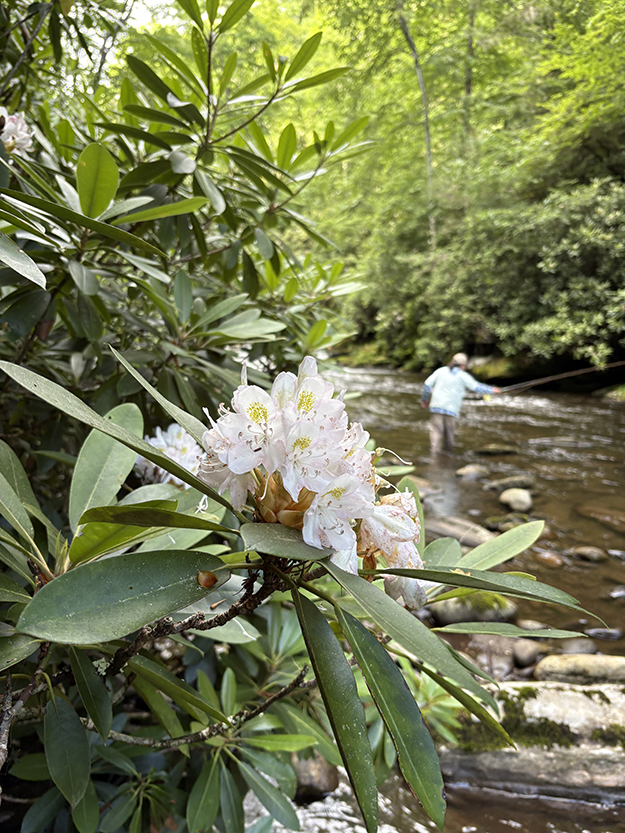
A summer heat wave that enveloped most of the Eastern US was also present in the Smokies, but thanks to some well-timed rainfall it had little to no negative impacts on our trout. Thunderstorms are sprouting over the mountains like mushrooms every afternoon. There’s absolutely no telling what areas will receive rain while others only hear thunder while remaining dry. Some days the Tellico River basin in the National Forest gets blown out while we stay sunny. Two days ago Bryson City, NC had several heavy thunderstorms in succession while Townsend, just over the mountains in Tennessee could see the dark sky but received no rain.
Low elevation fishing, primarily areas under 2000′, shouldn’t be your first choice. Getting up higher ensures you’ll find the coolest water and most active trout. However, the days following a good rain can actually be pretty good on the large streams. Dredging nymphs through the deepest slots and plunges can be really good if the water is up and the temperatures are down. Smaller, higher streams should be your first choice, but expect the large streams down low to pop right into shape when things cool down, even if only temporarily.
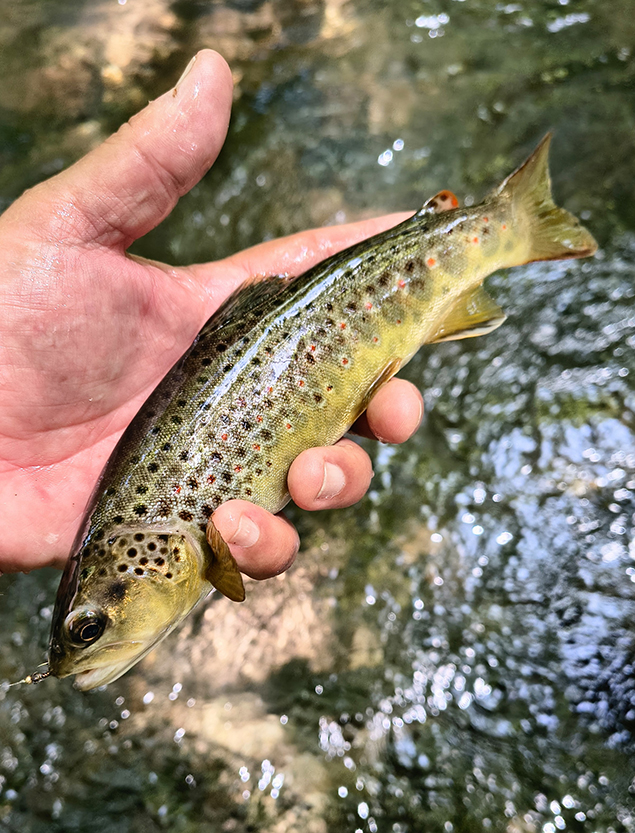
Dry / dropper rigs and terrestrial flies are solid choices during the summer months
Don’t expect to see much in the way of hatches this time of year. You might see mating swarms of Trico mayflies on the larger streams, but fishing tiny dry flies in the summer nevers seems to amount to much in this part of the world. Instead, focus your efforts on bushy attractor dry flies with small beadhead nymph droppers. Parachute Adams, Stimulators and the classic Thunderhead are all solid choices that will float well with a #16 – 18 beadhead dangling underneath.
Midsummer is THE time to fish ant and beetle patterns. We don’t really see many hoppers in the forests of the Smokies, but ants and beetles are great. While the fish love them, many of these flies can be hard to spot on the water. For that reason you might consider fishing them as a dropper under or behind a much more visible fly.
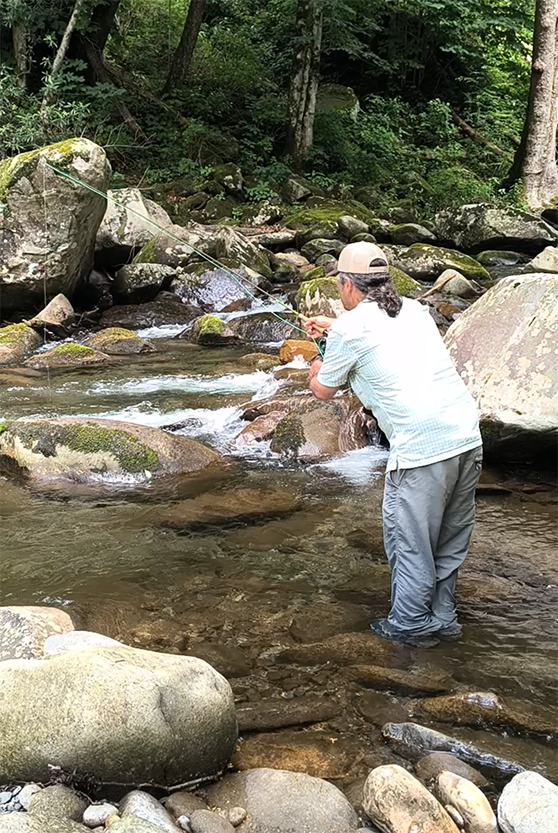
This is also the primary time of year to hike in to fly fish remote streams. Wet wading makes it easier to get to more distant locations without the weight of waders. Arrive at the trailhead a little early and invest the first part of your day hiking. This is a sure fire way to find fish that don’t see many flies. Furthermore, this is where you’ll find the coolest water and most active trout. Be sure to pack in plenty of water, extra snacks, a rain jacket and a small flash light if you’re out longer than you intended.
Streams have really rebounded from our early season drought. While we are officially behind on rainfall, current streamflows are actually right where we want them and the best we’ve seen all year. All of this can change, but extended forecasts continue to show pop up thunderstorms. This is critical to our good stream flows in the Southern Appalachians through the summer.
